






FOREWARNED appears on the surface to be a cooperative archaeological horror experience, but beneath its jump scares and tomb exploration lies a highly intricate behavioral system centered on the Mejai, the ancient entities that stalk the ruins. These supernatural adversaries are not random threats. They have specific personalities, predictable decision patterns, and adaptive reactions that shape every moment inside the tomb.
This article does not focus on general gameplay or basic mechanics. Instead, it digs deeply into the psychology, logic, and in-game systems behind Mejai behavior prediction, exploring how players can read the tomb, interpret signs, and anticipate the entity’s decisions before it materializes physically. In FOREWARNED, survival rarely depends on speed or aim, but on understanding the Mejai’s behavioral DNA.
Through ten sections arranged by time and meaning, we will follow the player’s journey from entering the tomb to the final escape, mapping each stage of Mejai interaction and uncovering the precise cues that experts use to survive encounters most players consider unpredictable.
Establishing the Behavioral Foundation: Identifying the Mejai Type Early
Before the entity physically manifests, players receive subtle behavioral clues that hint at which Mejai is haunting the tomb. Each Mejai has mental patterns and environmental footprints that align with its personality.
Early prediction is essential. Choosing equipment, planning routes, and allocating responsibilities depends on this understanding. For example, Arth is reckless and destructive, while Rathos is calculating and observational. Identifying these distinctions early changes every strategic choice that follows.
The first stage of prediction involves interpreting sound cues, object movement, and environmental anomalies. Players often fail because they treat these signs as random horror triggers rather than deliberate data points. FOREWARNED rewards analytical thinking more than raw courage.
The Tomb’s Language: Environmental Clues as Cognitive Indicators
Mejai behavior is inseparable from the environment. Each entity manipulates the tomb differently, creating what can be considered a behavioral fingerprint.
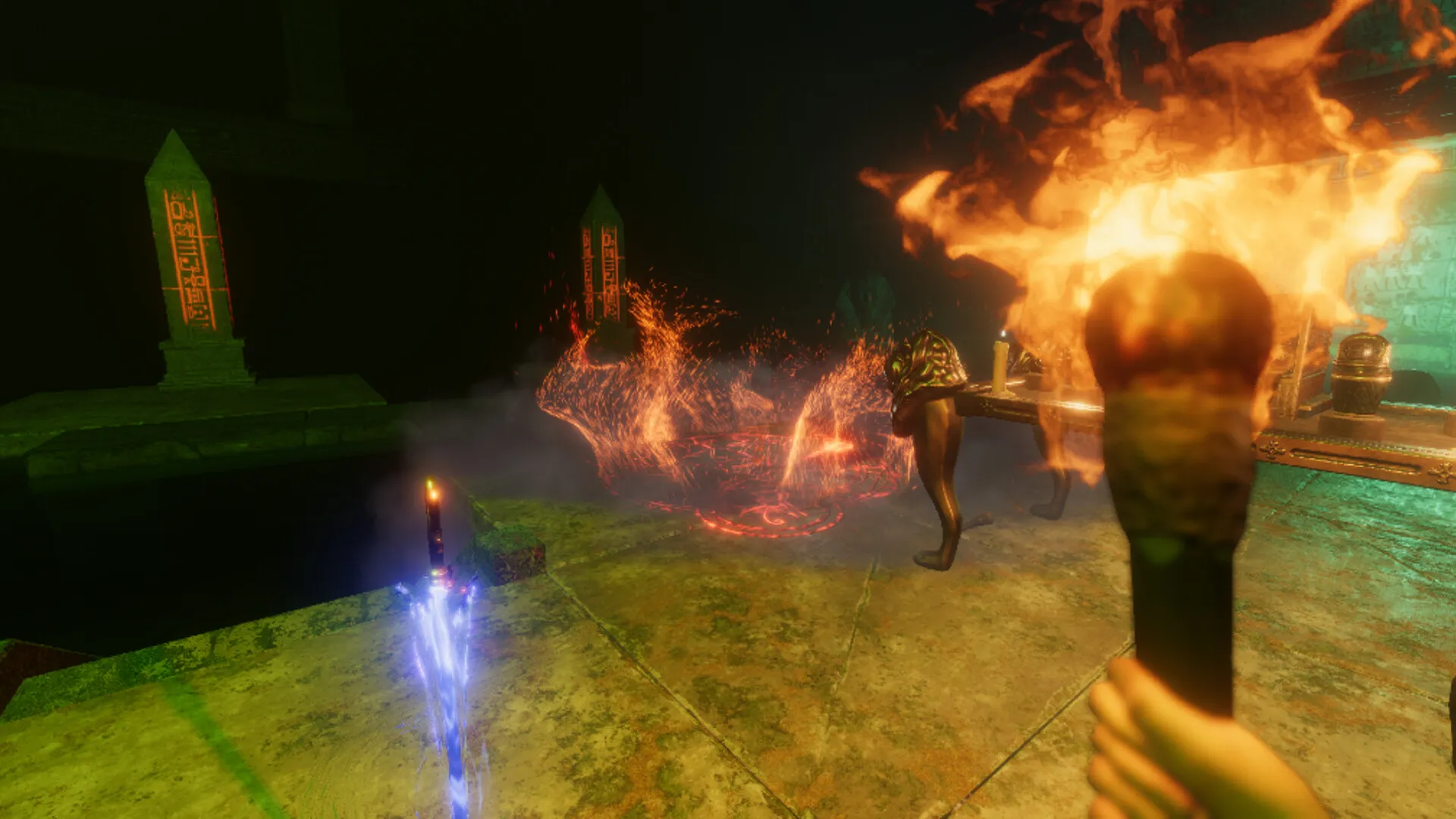
Torches extinguishing frequently, for example, hints at a Mejai that prefers stealth and disorientation. Sudden metallic clanging suggests aggression and territorial assertion. Even footsteps correspond to the entity’s mobility traits. Environmental decay patterns reflect ancient intelligence at work, not simple haunting.
Reading the tomb becomes an act of psychological interpretation. Players must treat the environment as a silent conversation with a dangerous mind. The tomb is not just a setting; it is an extension of the Mejai’s identity.
Adaptive Threat Patterns: How Mejai Responses Shift With Player Actions
One of FOREWARNED’s most underestimated mechanics is that Mejai behavior is not static. Each entity adapts to the players’ choices, reacting to noise, proximity, equipment use, and even hesitation.
H3: Influence of Player Tempo
Moving quickly through the tomb can provoke certain Mejai, accelerating their manifestations. Conversely, overly cautious play may lead others to grow more aggressive in order to force action. Player tempo directly changes the danger level.
H4: Reaction to Light, Sound, and Attention
Mejai that despise attention will attack when players shine lights on them. Others grow bold in darkness. Understanding these adaptive traits turns apparent randomness into a readable pattern of cause and effect.
The Transformation Phase: Predicting Physical Manifestation
As players collect evidence and move deeper into the tomb, there comes a moment when the Mejai stops merely influencing the environment and transitions into physical form. This transformation phase is one of the most critical and misunderstood systems in the game.
Indicators include intensified environmental manipulation, faster pacing of footsteps, and increased proximity audio cues. Players who mistake this escalation for simple ambience often get caught unprepared, especially in narrow corridors.
Experts learn to anticipate transformation by reading subtle increases in behavioral frequency. Even a small pattern shift can herald an imminent manifestation. Predicting the precise moment of transformation is often the difference between survival and panic.
Psychological Profiles: The Mental Logic Behind Each Mejai
Each Mejai has a personality crafted around ancient lore and gameplay design. Understanding these psychological profiles allows players to predict their actions with incredible accuracy.
H3: Examples of Behavioral Profiling
Ouphris: Deceptive, manipulates sound to misdirect
Necreph: Observational, reacts strongest to player intent
Talgor: Territorial, punishes intrusion with rapid aggression
Dekkan: Patient, watching players before striking decisively
These profiles are not merely flavor text. They define how the entities stalk halls, choose when to attack, and react to danger. By memorizing these psychological patterns, players build a mental model that predicts danger before it becomes lethal.
Escape Route Logic: How Mejai Herd Players Into Mistakes
Many players believe they choose their own escape routes, but in reality, Mejai behavior is designed to influence movement. The tomb layout blends with entity logic to create a predicted escape funnel, where players naturally follow paths that increase danger.
The Mejai often pushes players subtly through sound cues or positioning. For example, it may appear in a location that seems random, but the positioning is intentional, forcing players toward a more vulnerable route.
Understanding these patterns allows players to exploit the Mejai’s predictability. Recognizing when the entity is herding you into a trap allows teams to break the pattern, confuse the Mejai, and escape with artifacts and evidence intact.

Cooperative Decision Psychology: How Team Behavior Affects Mejai Logic
FOREWARNED differs from many horror games because the Mejai behaves differently depending on team composition, cooperation style, and communication efficiency. Player psychology becomes part of the Mejai’s behavior loop.
Teams that scatter trigger search behaviors from the entity. Teams that stay too tightly packed provoke intimidation or misdirection tactics. Silence, noise, panic, and confidence each influence how the Mejai responds.
This means predicting Mejai behavior also requires predicting teammates. A coordinated team creates clarity, while inconsistent teammates introduce unpredictable variables that can confuse even the most experienced players.
Timing Windows: The Exact Moments When Mejai Become Predictable
Despite their supernatural unpredictability, every Mejai in FOREWARNED has windows of predictable behavior. These windows are brief but critical for survival.
When the Mejai resets its patrol path, players have a few seconds of reduced threat. When it chooses a new stalking target, other players are temporarily safe. Recognizing these invisible timing windows separates expert players from beginners.
Learning the rhythm of Mejai behavior turns a chaotic horror experience into a predictable sequence of patterns. What seems like supernatural randomness becomes a clockwork structure of danger and opportunity.
Counterplay: Exploiting Weaknesses Without Relying on Trial and Error
Expert teams do not rely on the wiki, guesswork, or repeated deaths. They learn to exploit weaknesses by interpreting Mejai behavior in real time.
H3: Key Counterplay Strategies
Study movement patterns rather than running blindly
Use sound manipulation to influence entity decisions
Deploy tools to force behavior shifts
Choose routes that limit the Mejai’s preferred tactics
Counterplay in FOREWARNED is not about overpowering the entity. It is about outthinking it. Players who treat the Mejai as a puzzle rather than a threat unlock the true strategic depth of the game.
The Final Escape: Predictable Panic and Controlled Retreat
The final escape sequence is the culmination of everything learned. Panic peaks, and players must rely on behavioral prediction rather than fear-driven instinct.
The Mejai during this phase becomes more aggressive but also more predictable. It tends to block main exits, patrol choke points, and react strongly to noise. Understanding this allows players to plan their exit and misdirect the entity effectively.
Survival in the final minutes is not luck. It is the product of reading every tiny cue from the moment you entered the tomb. FOREWARNED punishes fear but rewards foresight.
Conclusion
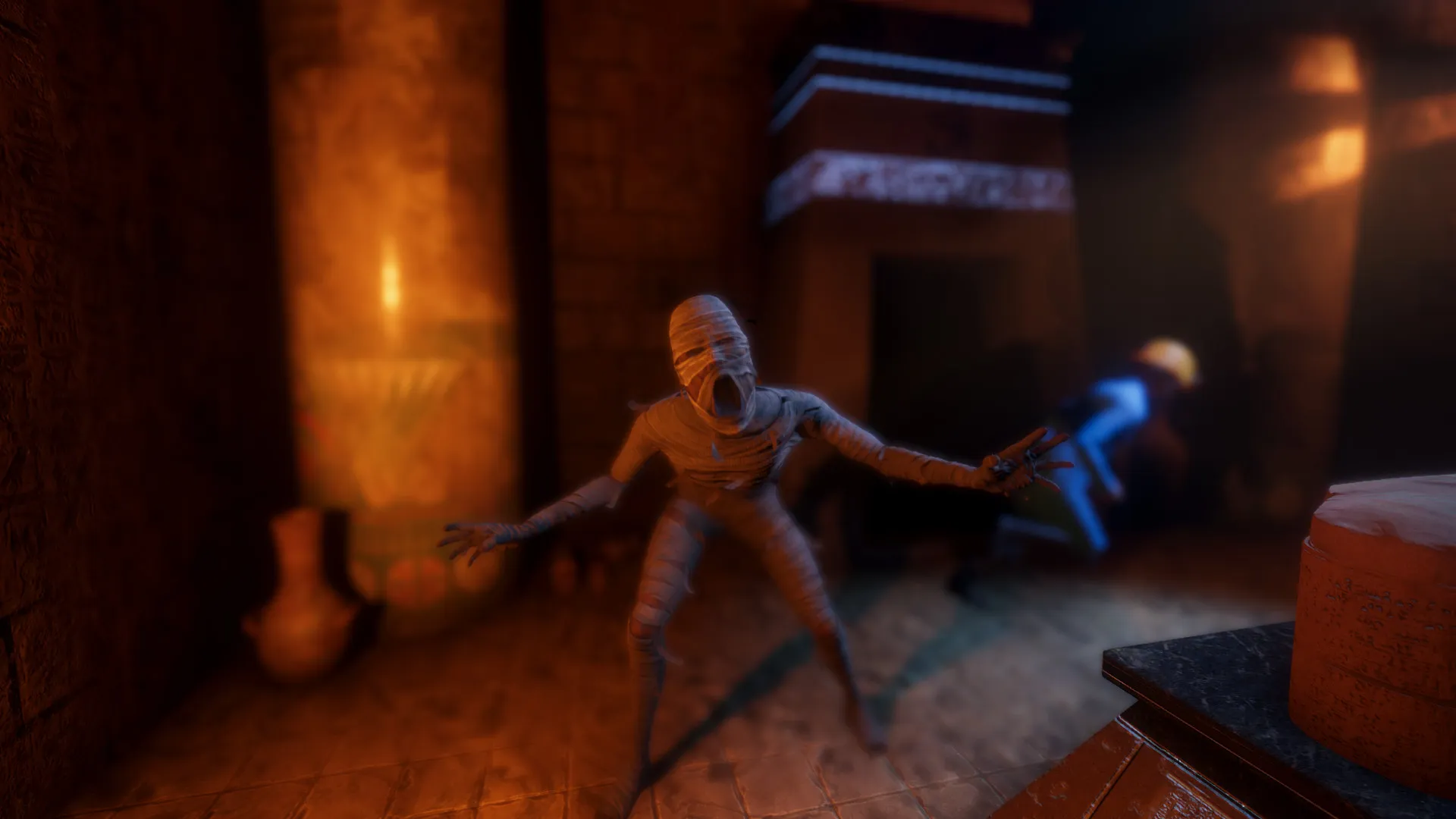
FOREWARNED is not simply a horror game. It is a sophisticated behavioral simulation where the Mejai operate with deliberate logic, personality, and adaptive intelligence. Predicting their behavior requires studying environmental clues, reading psychological profiles, interpreting timing windows, and understanding how player actions influence entity decisions.
Success comes not from bravado but from clarity. Not from running fast, but from thinking faster.
The Mejai appear supernatural, but their behavior is rooted in consistent patterns waiting to be understood. With mastery of prediction, every tomb becomes less a place of terror and more a battlefield of mind against ancient intellect.