HOW TO MASTER GUILD WARS® REFORGED: A COMPLETE STEP-BY-STEP GUIDE FOR NEW AND RETURNING HEROES
Guild Wars® Reforged reimagines the classic world of Tyria with updated systems, polished mechanics, and modernized class interactions. Whether you are a veteran returning after years or a newcomer stepping into Tyria for the first time, the game can feel overwhelming due to its deep build customization, tactical combat, and world-scale coordination. The goal of this guide is to teach you exactly how to understand, progress, fight, explore, and master the world of Guild Wars® Reforged in a step-by-step approach structured by time and meaning.
Each of the 10 core sections walks you through a different phase of gameplay—from your first steps out of the tutorial zone to the late-game elite missions, advanced team builds, and world defense events. Thoughtful progression, smart build design, and teamwork form the pillars of success. If you learn how these systems interlock, you can dominate PvE, support your squad, or even become a terror in competitive battlegrounds.
1. How to Start Your Journey in Tyria (Early Game Foundation)
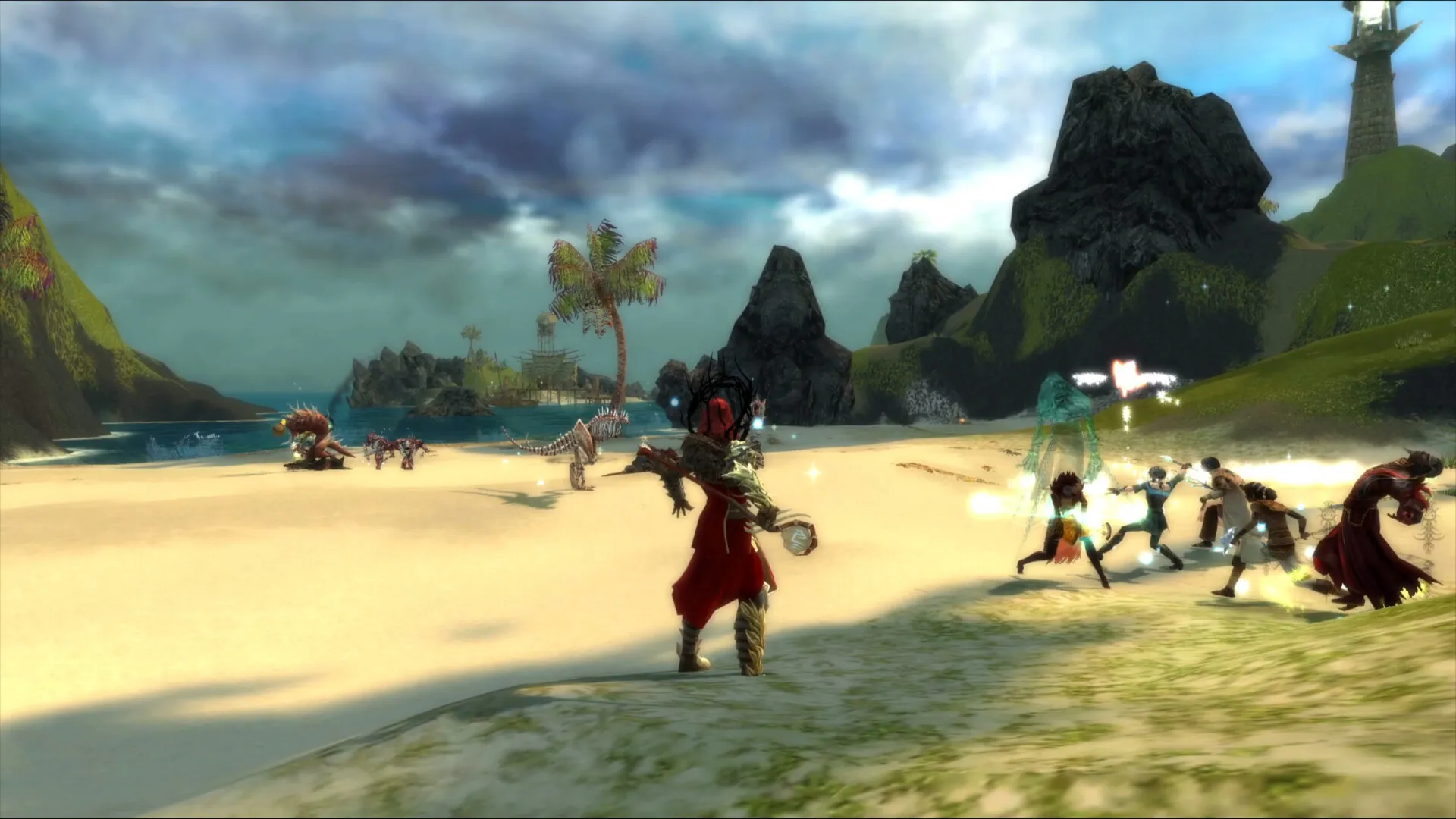
Your first hours in Guild Wars® Reforged determine how easily you adapt to the deeper mechanics later. During the opening stage, you need to learn movement, combat fundamentals, how energy and cooldowns work, and most importantly, the flow of each class. Unlike most MMOs, your skill bar is extremely limited—this forces strategic decision-making rather than button-mashing.
Explore your starting zone slowly. The tutorial areas exist to show you the rhythm of Guild Wars combat: dodge timings, optimal skill rotations, and when to conserve energy. Pay close attention to NPC dialogues, as many provide tips on quest patterns, travel routes, and mechanics that will be crucial later.
H3 – Early Skills to Master
- Basic movement + dodge rhythm
- Energy and cooldown management
- Skill synergy inside your bar
H4 – Beginner Mistake to Avoid
Do not copy advanced builds too early; you need to understand your class rhythm before relying on optimized setups.
2. How to Choose the Best Profession Combination (Build Identity Phase)
Guild Wars® Reforged updates the dual-class system with improved synergy. Your primary class defines your core mechanics, while your secondary class offers support or utility. Choosing the wrong combination can make the early game harder, while smart pairing makes combat fluid.
Take your time to test skills, swap combinations, and experiment. The game encourages identity discovery—Warrior/Monk plays differently from Warrior/Elementalist, even if both share the same armor type. Pay attention to how attributes influence one another, and discover which playstyle feels natural.
H3 – Popular Pairings for Beginners
- Warrior/Monk for self-sustain
- Ranger/Elementalist for strong AoE pressure
- Monk/Mesmer for energy control + healing
H4 – Tip
Focus on synergy, not theme. Some combinations look cool but perform poorly without clear purpose.
3. How to Progress Through Early Zones Efficiently (Early Adventure Phase)
Once you've chosen your profession, the next challenge is efficient zone progression. Guild Wars® Reforged rewards exploration with skill points, hero unlocks, and crafting materials, but wandering aimlessly can waste valuable early time.
Follow the natural quest flow, but also explore optional areas to unlock map travel points. Champion encounters in these zones often drop powerful early skill tomes that boost your build. Learn enemy attack patterns early—most mobs in the opening zones teach mechanics that elite enemies later exaggerate.
H3 – Zone Strategy Tips
- Unlock waypoints early
- Keep all dropped crafting materials
- Fight champions to earn early tomes
H4 – What to Avoid
Skipping side zones leads to fewer skills and fewer tactical options in the mid game.
4. How to Build an Effective Skill Bar (Skill Synergy Phase)
The heart of Guild Wars® Reforged combat lies in the eight-slot skill bar. Even late-game veterans cannot exceed the limit, so intelligent skill choices matter more than gear. A good bar contains damage, defense, utility, and synergy.
Skills should interact meaningfully—an Elementalist might bring a skill that burns enemies, then combine it with one that deals bonus damage to burning targets. A Monk should pair heals with energy recovery tools. Your bar must feel like a machine in which every part supports the others.
H3 – Essential Build Concepts
- Energy sustainability
- Synergistic skills
- One emergency skill
- One mobility or gap-closer
H4 – Common Skill Bar Error
Avoid filling your bar with high-cost “flashy” abilities; you will run out of energy instantly.
5. How to Manage Energy, Cooldowns, and Positioning (Combat Efficiency Phase)
Guild Wars® Reforged combat rewards tactical movement far more than raw stats. Learning how to dodge, kite, reposition, and time skills separates the skilled from the inexperienced. Enemy AI in Reforged is more aggressive, forcing you to think strategically in real time.
Energy is finite—many players spam spells until empty, then become useless. Instead, watch enemy cast animations and use your high-impact abilities only when they guarantee value. Positioning is also key: melee fighters must avoid frontal attacks, and casters must stay behind allies without clumping.
H3 – Combat Movement Rules
- Never stand still
- Dodge when the enemy’s attack animation begins
- Position behind tanks
H4 – Energy Principle
Spend energy only when it produces value. Damage wasted on invulnerable or shielded enemies is resources lost.
6. How to Unlock and Manage Heroes Effectively (Companion Strategy Phase)
Heroes return in Guild Wars® Reforged with smarter AI and deeper build customization. You can assign full skill bars, equipment, and behavior patterns to your hero companions. Treated correctly, they become the backbone of your squad.
Start by unlocking supportive heroes—healers, buffers, and control casters. These heroes let you experiment with offensive builds while maintaining survivability. Give each hero a clear role and do not mix too many responsibilities on one bar.
H3 – Hero Roles to Prioritize
- Healer hero
- Crowd-control hero
- Tank or bruiser hero
H4 – Hero Optimization Tip
Turn off skills that heroes misuse. Manual control greatly increases efficiency.
7. How to Approach Mid-Game Dungeons (Dungeon Preparation Phase)
Dungeons in Reforged are more tactical than before, requiring specific resistances, coordinated skill bars, and intelligent hero AI settings. Each dungeon has a theme: fire hazard, mob swarms, elite casters, or boss mechanics requiring interrupts.
Study the dungeon theme before entering. Build for that theme: bring fire resistance, interrupts, or condition removal depending on the zone. Many mid-game fights require pulling enemies one pack at a time to avoid overwhelming your team.
H3 – Dungeon Preparation Checklist
- Adjust hero skill bars
- Bring a counter for the dungeon’s main mechanic
- Stock up on recovery consumables
H4 – Common Dungeon Mistake
Rushing in without scouting enemy composition leads to wipe after wipe.
8. How to Optimize Your Equipment and Crafting Path (Gear Progression Phase)
Guild Wars gear does not scale endlessly; instead, it encourages strategic stat selection. Reforged enhances this by introducing modular runes, weapon cores, and profession-specific enhancements.
Crafting is your ideal route to optimized equipment, but it requires planning. Farm specific zones for crafting materials and use hero salvage kits to break down rare drops into useful components. Focus first on weapons, then armor runes, and finally cosmetic enhancements.
H3 – Gear Priorities
- Weapon → biggest power increase
- Armor runes → survivability
- Accessories → attribute optimization
H4 – Crafting Tip
Never sell rare materials early—many are needed for late-game sets.
9. How to Coordinate with Teams in Elite Missions (High-End Group Phase)
Elite missions are the ultimate test of teamwork. These encounters require coordinated interrupts, synchronized burst phases, boss mechanic awareness, and sometimes split-team objectives. Communication becomes essential.
Form or join a squad with clearly defined roles. Assign each player specific tasks—interrupt specialist, buff manager, crowd controller, healer rotation operator. Use voice chat or short predefined macros to coordinate timing during challenging fights.
H3 – Elite Mission Roles
- Frontliner
- Support healer
- Condition removal specialist
- Interrupt controller
H4 – Team Rule
Panic kills runs. Stay calm even when the mission becomes chaotic.
10. How to Master Late-Game Builds and World Events (Endgame Mastery Phase)
Endgame content in Guild Wars® Reforged includes world bosses, open-world siege events, and multi-phase elite battles with complex mechanics. To conquer these challenges, you must push your build, gear, and teamwork to their limits.
Experiment with late-game builds optimized around synergy. Many players develop specialized bars for specific world events—for example, anti-armor builds for tank bosses or high-interrupt builds for mage events. Learn the patterns, adjust your team composition, and perfect movement.
H3 – Late-Game Mastery Tips
- Adapt builds to event types
- Maximize rune sets
- Learn boss attack patterns by repetition
H4 – Core Truth
Mastery comes from understanding your build, not copying someone else’s.
Conclusion
Guild Wars® Reforged rewards knowledge, synergy, planning, and teamwork. By learning how to pick your class, develop a skill bar, build your heroes, manage energy, fight tactically, prepare for dungeons, coordinate in elite missions, and adapt your equipment and strategy, you gain full control of your adventure in Tyria. The game remains one of the deepest tactical MMORPG experiences, and mastering its systems is both a challenge and a joy. With this “how to” guide, you now have the roadmap to progress from a beginner hero to a late-game commander capable of conquering Tyria’s greatest threats.